
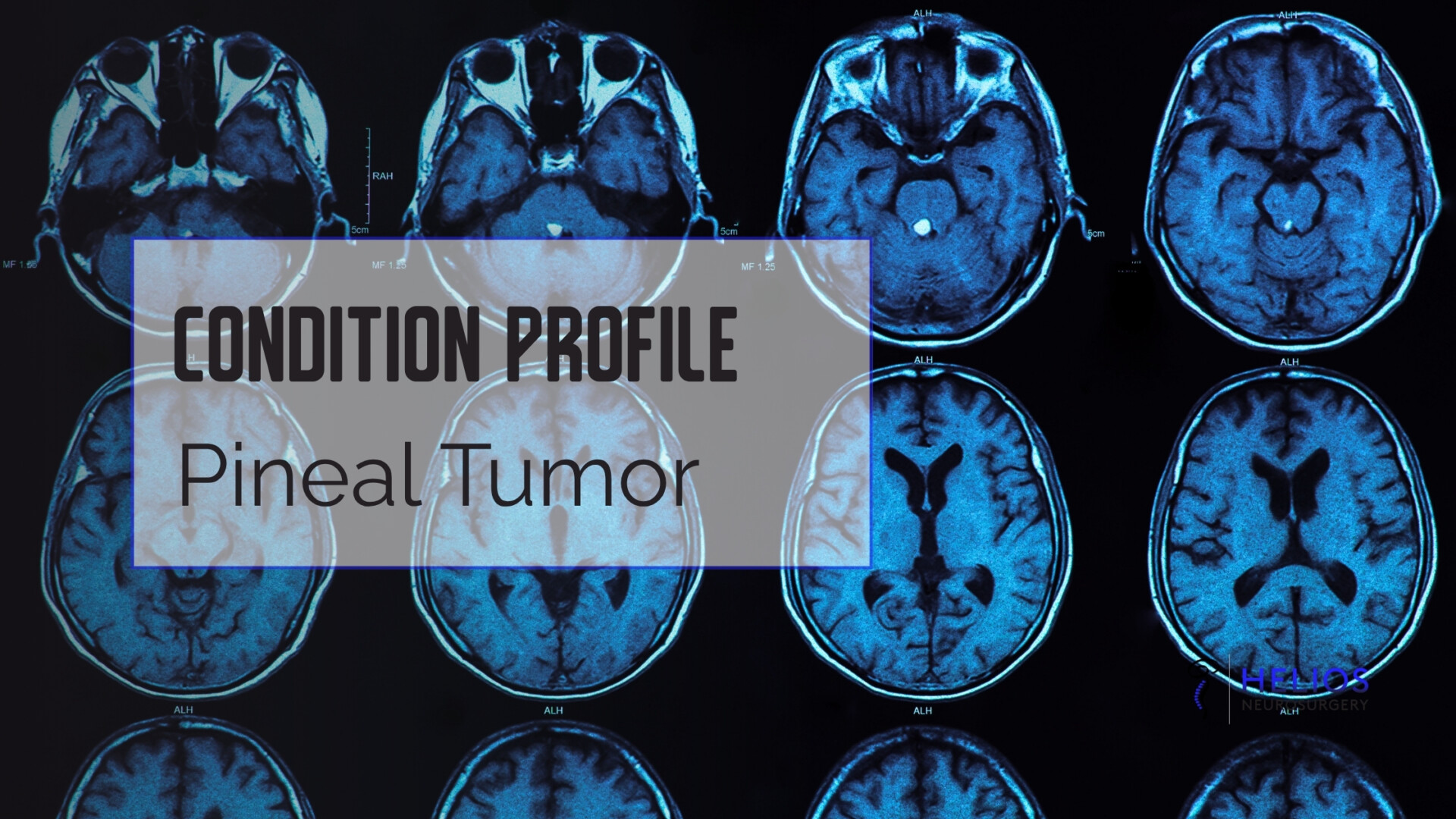
A pineal tumor develops in the region of the pineal gland, a small midline structure located deep within the brain’s fluid pathways. This deep-seated location places these tumors in close proximity to the aqueduct of Sylvius- a narrow channel essential for the natural circulation of cerebrospinal fluid (CSF)- as well as critical visual and brainstem pathways. Whether these lesions are benign cysts, slow-growing tumors, or more aggressive cell types, their expansion can quickly disrupt natural fluid dynamics and cause significant mass effect.
Patients experiencing a pineal region mass often present with signs of increased intracranial pressure due to obstructive hydrocephalus. This can cause persistent headaches, nausea, and changes in vision, such as Parinaud’s syndrome, which affects your ability to look upward.
Managing lesions in this deep anatomical territory requires exceptional technical skill, an analytical mind, and a steady hand. Helios Neurosurgery replaces the anxiety of navigating a rare, deep-brain diagnosis with clear, straightforward direction.
Dr. Lee treats pineal lesions using tailored, minimally disruptive surgical strategies. Depending on the specific characteristics of your tumor, treatment may involve an endoscopic third ventriculostomy (ETV) to bypass the fluid obstruction and immediately normalize intracranial pressure without requiring a permanent shunt. For tumors requiring structural removal or biopsy, we utilize advanced, image-guided microsurgical approaches designed to safely navigate deep corridors while protecting the surrounding brain tissue. We guide you carefully through every stage of this complex process with clear communication and precision care.
