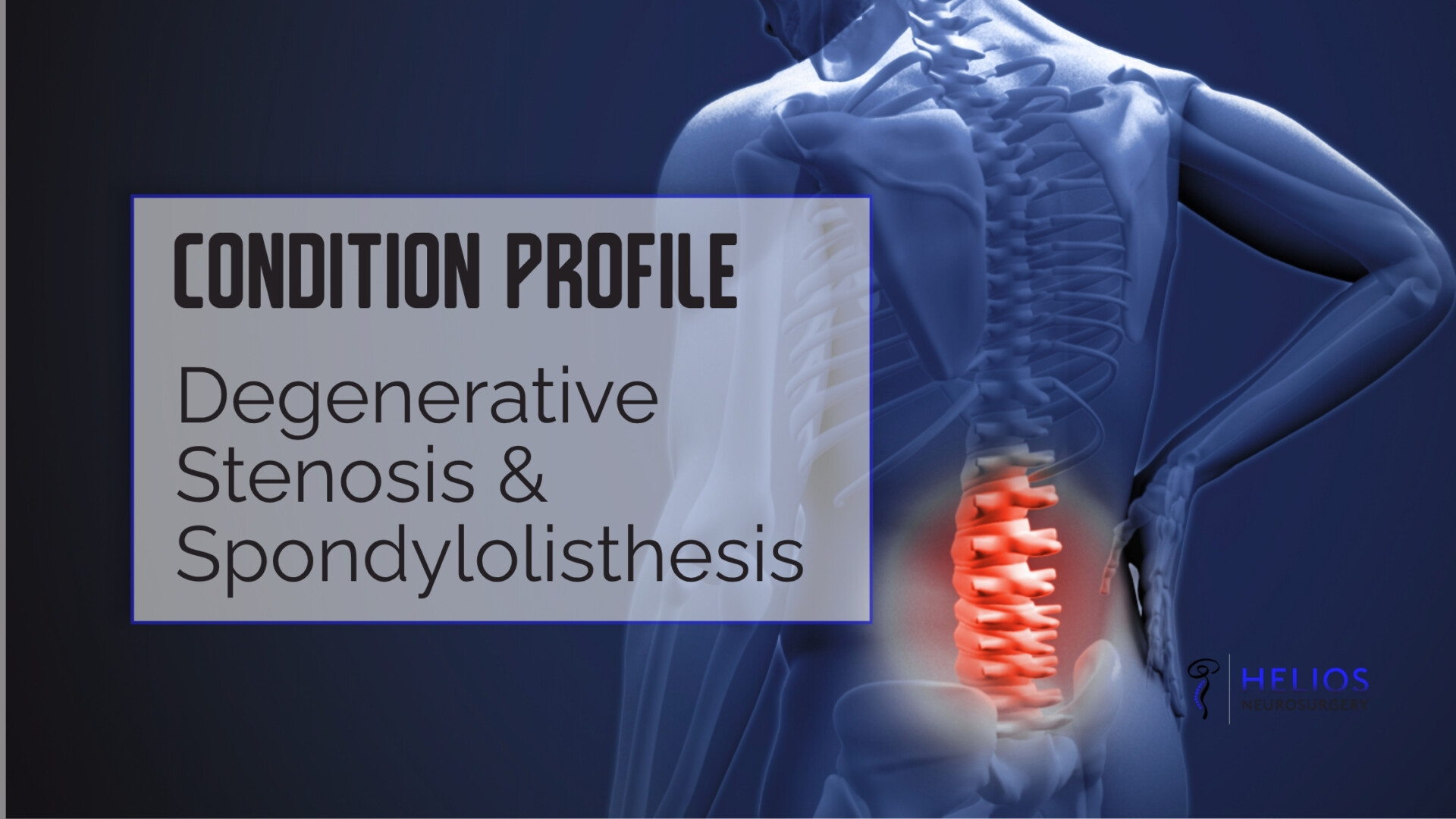
Degenerative spinal stenosis and spondylolisthesis are closely related structural conditions that compromise the space and stability of the spinal canal. Spinal stenosis occurs when arthritic wear, thickened ligaments, and bone spurs cause a progressive narrowing of the bony channels where nerves travel. Spondylolisthesis develops when a vertebra loses its structural alignment and slips forward over the bone beneath it, creating mechanical instability and further pinching the neural pathways.
This combination typically manifests as neurogenic claudication- a condition characterized by an aching heaviness, cramping, or numbness in the legs that worsens with walking or standing and is temporarily relieved by leaning forward. Managing these conditions requires clear clinical coherence to determine exactly where mechanical instability ends and nerve compression begins.
Helios Neurosurgery delivers clear, down-to-earth surgical guidance for these complex mobility challenges. We cut through the medical jargon to explain how these structural shifts affect your daily function.
When non-surgical therapies no longer support your daily activities, our surgical interventions are tailored to the exact mechanics of your spine. For isolated stenosis without structural slippage, a precise microsurgical decompression or laminectomy can clear away bone spurs and widen the canal. If spondylolisthesis is present and causing mechanical instability, we combine nerve decompression with targeted spinal instrumentation and fusion. This approach restores proper alignment, permanently stabilizes the slipping segment, and allows you to stand and walk with confidence.
