Keyhole surgery represents a refined philosophy in modern cranial neurosurgery, centered on the principle that the path to a brain lesion should be as small and direct as possible. Rather than relying on traditional, wide-exposure craniotomies that require large incisions and extensive hair removal, keyhole surgery utilizes small, precisely planned entry points tailored entirely to the patient’s specific anatomy. By leveraging natural structural pathways, a neurosurgeon can safely access deep-brain pathology, skull base tumors, or vascular anomalies with minimal disruption.
At Helios Neurosurgery, we match advanced technical skill with a grounded, human approach. Dr. Lee routinely utilizes specialized keyhole corridors, including eyebrow (supraorbital) and eyelid (transorbital) approaches. These sophisticated techniques place the incision directly within a natural cosmetic crease or hair line, rendering the surgical entry point virtually invisible once healed.
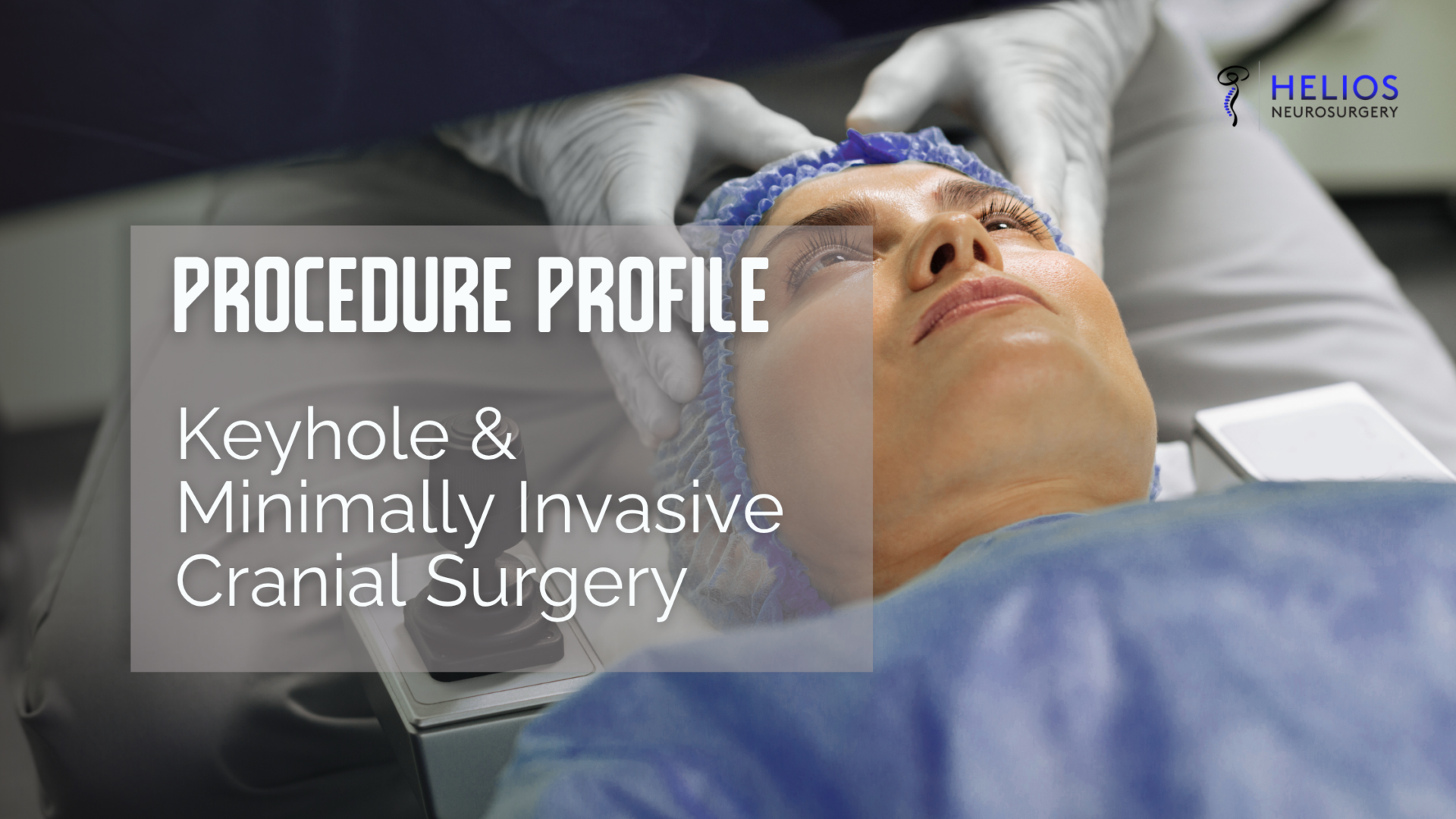
During an eyebrow keyhole procedure, a small incision is made along the upper border of the brow, allowing a miniature bone window to be created right above the orbit. This corridor provides a direct line of sight to the frontal lobes, pituitary region, and anterior circulation vessels without requiring significant brain retraction.
Throughout the operation, high-definition endoscopes and specialized micro-instruments navigate the natural spaces at the base of the skull. By significantly reducing muscle trauma and bone exposure, this approach minimizes post-operative discomfort, prevents facial swelling, and allows patients to return to their normal lives and loved ones much faster.
